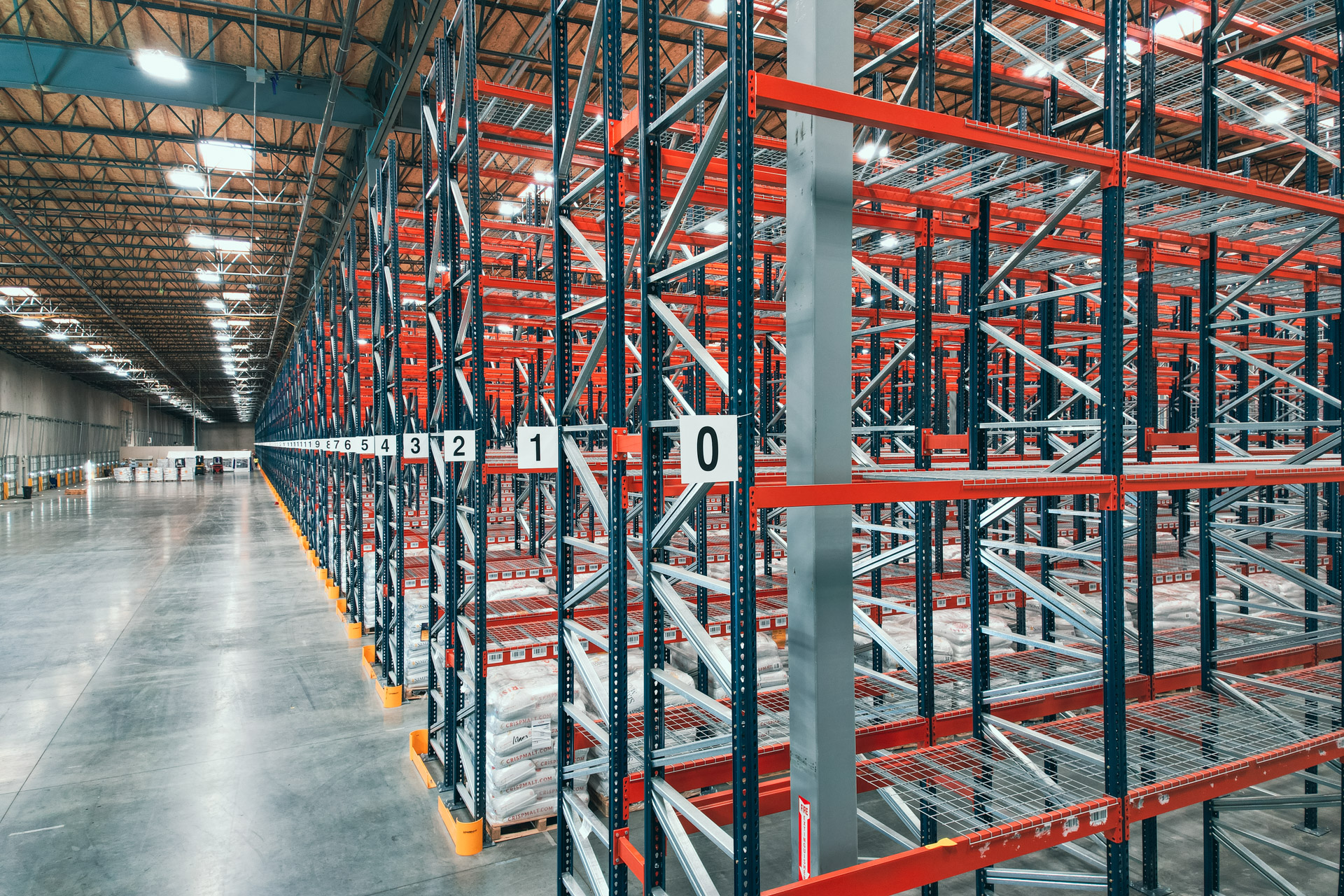
Pallet Racks & Warehouse Racking in Wallace, NC
Pallet racks in Wallace, NC, should follow the withdrawal sequence your products require, not a storage-density target alone. Record pallet counts by item and lot, then separate dated stock from loads that can leave in reverse receiving order. That distinction guides the choice between flow lanes, shared lanes, and selective access.
Poultry processing and cold storage make Wallace a cold-chain hub on I-40. New rack selection should account for the intended operating temperature, pallet construction, and replenishment method. Compare usable positions only after allowing for loading faces, retrieval aisles, and the staging needed to keep product movements organized.
Pallet Flow Warehouse Racking for Cold-Chain Rotation
Separate replenishment and retrieval faces make pallet flow an option for first-in, first-out food handling. Assign lanes around product identity and lot-control requirements before calculating depth. Suitable pallets and disciplined loading are essential to the intended sequence; a gravity lane does not resolve mixed-date assignments automatically. Provide the full expected weight range when discussing the moving components and lane arrangement.
Temperature conditions belong in the equipment specification alongside pallet dimensions and underside construction. Review representative pallets for damage, inconsistent boards, or features that could affect travel. Loading and retrieval faces each need working space, so compare the complete lane footprint with selective storage rather than counting only the pallets held between the two operating ends of the system.
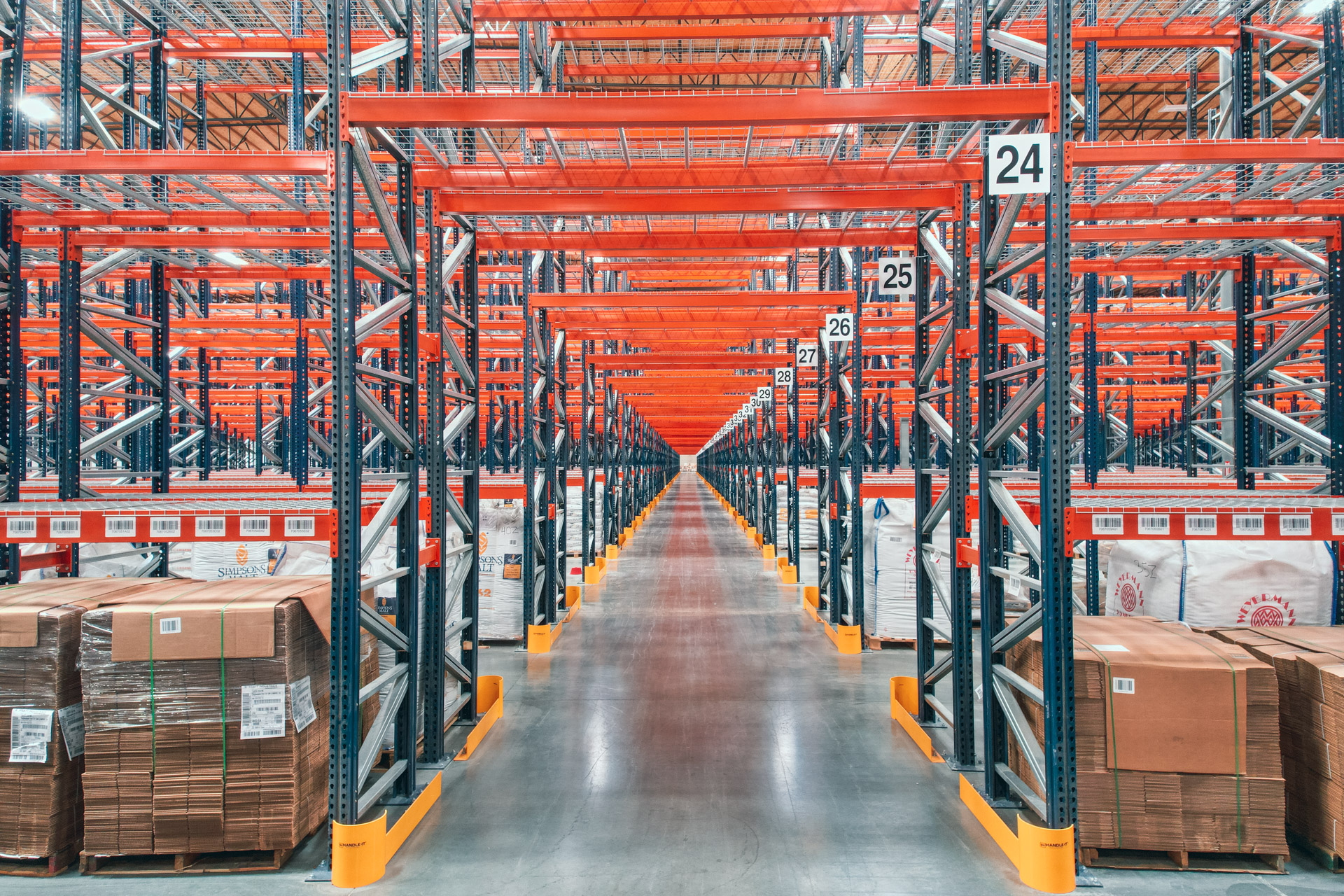
Drive-In Pallet Rack for Repeated Cold-Storage Loads
Drive-in rack groups repeated pallets where shared access suits the shipping sequence. Establish the quantity held per item and the degree of lot separation required before choosing lane depth. Empty positions behind inaccessible stock can reduce usable storage, making a shallower lane preferable when inventory quantities vary or different products cannot be assigned to the same storage channel.
Truck clearance inside each lane must be reviewed with the loaded equipment, not just its unloaded dimensions. Identify pallet overhang, load shape, and any packaging movement expected during storage. Rail support and entry geometry should match the selected pallet and handling method. Different carriers or unusually shaped loads require review before being assigned to an otherwise standard-looking storage lane.
Selective Industrial Pallet Racks for Separate Lots
Selective bays retain individual access for short runs, mixed products, and lots that should not share a deep lane. Place those rows where operators can check and retrieve the required load without moving unrelated pallets. Bay openings should reflect actual wrapped dimensions, handling gaps, and the support needs of the pallet rather than its nominal footprint alone.
Heavier product groups may require a different beam selection from lighter packaged goods. Calculate the combined load at each level, then verify the frame against the planned vertical spacing. Include loaded truck reach when choosing upper elevations. A location should count toward capacity only when the assigned pallet can be placed and retrieved with the intended handling equipment.
Pushback Pallet Rack Systems for Compatible Reserve
Pushback rack offers multiple pallet positions behind one access face when last-in, first-out movement suits the assigned goods. Compare it with flow storage using actual rotation requirements rather than density alone. The cold-chain lane specification follows pallet bases, load variation and stock assignments. Products requiring the earliest received pallet first should not be placed there merely to fill available positions.
A reviewed CAD drawing can separate pushback reserve, flow lanes, drive-in blocks, and selective lots without confusing their operating sequences. The quote identifies new rack and lane components, freight, and installation. Food-lane equipment is assembled by experienced installation crews we schedule and manage. Cold-storage work areas are released in sequence under the agreed staging plan, and configuration changes receive a loading review.
Define Your Wallace Cold-Storage Layout
Share pallet construction, weight ranges, operating conditions, and lot quantities for a system comparison. (910) 597-4473.
Wallace Rotation and Rack Questions
Review Additional Storage Facilities
Separate each facility's temperature conditions and withdrawal rules before comparing equipment.
Match Storage Lanes to Product Rotation
Discuss dated-stock lanes and direct lot access in a free CAD drawing. (910) 597-4473